

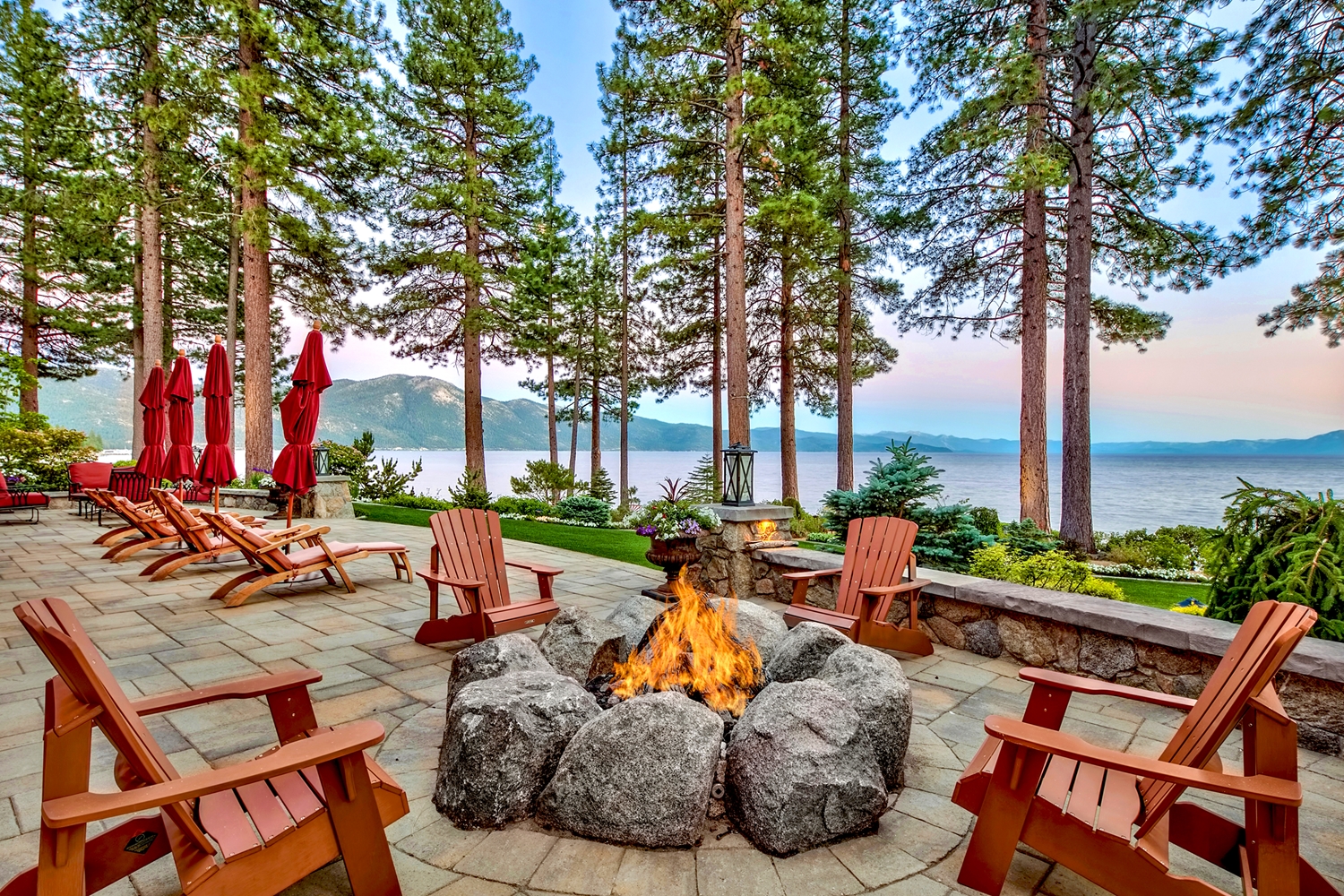
Incline Village Lakefront Real Estate: The Definitive Buyer & Seller Guide
There is luxury real estate, and then there is Lake Tahoe lakefront.
An inside guide to buying, selling, and valuing Incline Village and Crystal Bay lakefront real estate from Mary Kleingartner & Ryan Mitchell, Compass
Few categories of real estate are as scarce, individual, or difficult to compare as Incline Village lakefront real estate.
Two homes can sit only a few properties apart on Lake Tahoe, have similar square footage, similar acreage, and seemingly similar views, yet be worth millions of dollars apart.
Why?
Because at the lakefront level, you’re buying far more than the house.
You’re buying a particular piece of Lake Tahoe.
That’s the first thing we want both buyers and sellers to understand about lakefront value.
The residence matters enormously. Architecture matters. Construction quality matters. Condition, design, technology, amenities, and outdoor living all matter.
But the underlying real estate is irreplaceable.
A sandy beach. A private pier. Buoy amenities. Water access. Privacy. Sun exposure. Topography. The orientation of the parcel. The relationship between the house and the water. The quality and usability of the shoreline itself.
Those characteristics can matter just as much as what sits inside the front door, and understanding how sophisticated buyers value them is one of the most important parts of successfully representing Lake Tahoe lakefront real estate.
There Is No Average Incline Village Lakefront
That’s why we’re cautious whenever someone tries to reduce Lake Tahoe lakefront real estate to an average price per square foot.
Price per square foot can be useful.
It just doesn’t tell you enough.
A spectacular newer residence on compromised shoreline may appeal very differently from an older home sitting on an extraordinary sandy beach with a pier.
A property with beautiful afternoon sun may feel completely different from another lakefront that falls into shade much earlier.
One parcel may offer tremendous privacy and effortless access to the water. Another may have equally impressive lake frontage on paper but substantial elevation between the residence and shoreline.
And sometimes the house that photographs better isn’t the property we’d rather own.
Knowing the difference matters whether we’re advising a buyer considering an eight-figure purchase or a seller determining how to position an extraordinary lakefront property for the market.
Lakefront Experience Is Different
Our perspective on Incline Village and Crystal Bay lakefront real estate doesn’t come from simply touring beautiful homes or studying closed sales.
We’ve represented buyers and sellers in significant lakefront and ultra-luxury transactions throughout Incline Village and Crystal Bay for years.
Our experience includes properties on Lakeshore Boulevard, North Lake Circle, Shoreline Circle, Debra Lane, Pine Cone Circle, and Vivian Lane, as well as major lakefront estates, eight-figure transactions, confidential sales, and highly individual properties where conventional comparable-sale analysis only begins to tell the story.
Our closed-sale experience and production are documented through IVR MLS, NNR MLS and verified off-market transactions, with applicable private sales verifiable through county records.
That includes our $13.8 million closed lakefront sale at 260 North Lake Circle, along with years of successfully representing clients in some of the highest tiers of the Lake Tahoe real estate market.
This isn’t a segment of the market we’re trying to enter. It’s a market we’ve been successfully working in for years.
And that distinction matters.
Lakefront is not a category where an agent should be learning on a client’s property or purchase.
Representing a significant Tahoe lakefront requires understanding how the shoreline affects value, what sophisticated buyers prioritize, how one lakefront competes with another, which property characteristics deserve deeper due diligence, how redevelopment potential may affect the equation, and how to negotiate when relatively small percentage differences can represent hundreds of thousands or even millions of dollars.
We’ve worked through those decisions from both sides of the transaction.
We’ve advised sellers on how to position and market extraordinary lakefront real estate to maximize its value.
We’ve advised buyers on when a lakefront property deserves its premium, what can’t be recreated, what deserves additional investigation, and when the underlying real estate may be more valuable than the house currently sitting on it.
Actual Lakefront Transaction Experience
Mary Kleingartner and Ryan Mitchell’s experience includes representing buyers and sellers of significant lakefront and ultra-luxury properties throughout Incline Village and Crystal Bay, including properties on Lakeshore Boulevard, North Lake Circle, Shoreline Circle, Debra Lane, Pine Cone Circle, and Vivian Lane.
That experience includes a $13.8 million closed sale at 260 North Lake Circle, multiple eight-figure transactions, and years of working at the highest levels of the Lake Tahoe luxury market. Our understanding of Tahoe lakefront value comes from actually buying and selling it with our clients.
What Actually Determines Lakefront Value?
When we evaluate an Incline Village or Crystal Bay lakefront, we’re looking at the entire asset.
That includes the residence, but it also includes questions conventional real estate statistics don’t answer particularly well.
What is the shoreline actually like?
Is there a sandy beach?
What pier and buoy amenities exist?
How usable is the waterfront?
How naturally does the property access the lake?
How private does it feel?
What is the sun exposure?
How does the home relate to the water?
What characteristics are genuinely scarce?
What can potentially be improved, and what can never be changed?
For sellers, those answers help us determine how the property should be valued, positioned, marketed, and ultimately negotiated.
For buyers, they help us determine whether a premium is justified and whether the property they’re considering is truly as irreplaceable as it appears.
Those distinctions become increasingly important as the price rises because sophisticated lakefront buyers aren’t simply comparing houses.
They’re comparing ownership experiences.
We’ve Seen What Buyers Actually Pay For
Years of working in this market have given us a perspective that can’t be replicated by looking at listing photos or a spreadsheet of comparable sales.
We’ve seen the properties buyers immediately understand.
We’ve seen beautiful homes where the underlying lakefront creates compromises.
We’ve seen older residences sitting on parcels we’d consider extraordinary.
We’ve seen sellers maximize the characteristics that make their property different.
And we’ve watched sophisticated buyers place enormous premiums on attributes that can be surprisingly difficult to appreciate until you’re standing on the property itself.
That experience influences how we advise every lakefront client who comes next.
A Guide for People Actually Buying or Selling Lakefront
This isn’t going to be a generic overview telling you that Lake Tahoe is beautiful and waterfront real estate is expensive.
If you’re considering buying or selling a significant lakefront property, you already know that.
Instead, we’re going to explain the differences that actually affect value and decision-making.
We’ll look at sandy beaches, piers and buoys, shoreline quality, water access, privacy, sun exposure, topography, views, redevelopment potential, the importance of the underlying parcel, and why two lakefront properties that look similar online can perform very differently in the market.
We’ll explain what we look for when advising a buyer considering a major lakefront purchase.
We’ll explain what we look for when determining how to position and market an exceptional lakefront for a seller.
We’ll talk about the things that can be changed, the things that can’t, and the characteristics we’ve learned sophisticated Tahoe buyers are willing to pay extraordinary premiums to own.
And later in this guide, we’ll answer a question clients occasionally ask us:
If money were no object, what kind of Incline Village lakefront would we buy ourselves?
Our answers aren’t exactly identical.
But they have two things very firmly in common.
A sandy beach and a pier.
2. The Lakefront Itself: What You’re Really Buying
When we walk a significant Incline Village or Crystal Bay lakefront with a buyer, we don’t start with the kitchen.
We start with the lake.
That’s intentional.
Interiors can be remodeled. Architecture can be reimagined. Systems can be replaced. In the right circumstances and subject to applicable regulations and approvals, even the residence itself may change dramatically over time.
But the fundamental characteristics of the parcel and shoreline are much harder, and sometimes impossible, to change.
For a buyer considering a major lakefront purchase, that’s where we want to understand the property first.
For a seller, those same characteristics may be among the most important assets we’re actually marketing.
A Sandy Beach Is a Very Big Deal
If you ask us what separates some of our favorite Incline Village lakefront properties from the rest, a beautiful sandy beach is going to come up very quickly.
There is an emotional component to it, of course. Walking directly out to your own beach on Lake Tahoe is an extraordinary experience.
But there is also a practical component.
A usable sandy beach changes how people interact with the lake.
It’s where people sit, swim, launch a paddleboard or kayak, gather with friends, watch the sunset, or simply walk barefoot to the water.
Compare that with a property where the shoreline is predominantly rocky, difficult to access, or usable only from a pier.
Both are technically lakefront.
They are not the same ownership experience.
And sophisticated lakefront buyers understand that distinction.
A Pier Can Fundamentally Change the Property
A pier is another feature we consider extraordinarily important.
It creates direct access to the lake, boating, swimming, and the entire summer experience that draws many buyers to Lake Tahoe in the first place.
But simply seeing a pier in a photograph isn’t enough.
We want to understand what actually exists, how it functions, the water conditions around it, what associated amenities or rights exist, and whether there are any limitations or considerations a buyer needs to investigate.
The same applies to buoys and other shoreline amenities.
For buyers, these are matters to verify carefully during due diligence rather than assume based on marketing.
For sellers, accurately understanding and presenting those assets can be essential because they may materially affect how a sophisticated buyer perceives the property.
Water Depth & Usability Matter
Lake Tahoe’s water level changes over time.
That means the practical usability of a lakefront can matter just as much as the fact that it has a pier.
We pay attention to the shoreline configuration, the water around the pier, and how the waterfront functions under different conditions.
This is another reason two lakefront properties that appear comparable in MLS data can provide very different experiences in person.
A buyer who intends to boat regularly may evaluate the waterfront differently from someone primarily interested in swimming, paddleboarding, privacy, or simply having a beautiful beach outside the house.
Understanding how the client actually wants to use Lake Tahoe is part of understanding which lakefront is right for them.
How You Get From the House to the Lake Matters
This is one of the things photographs can hide surprisingly well.
Every lakefront home has a lake.
Not every lakefront home has an effortless relationship with it.
Some properties flow naturally from the main living areas into outdoor spaces and down to the shoreline. The lake feels like an extension of the house.
Others may involve substantial stairs, elevation changes, retaining structures, or a more complicated path to the water.
Neither is automatically good or bad. Elevated properties can offer spectacular views and privacy.
But the experience is different.
And when we’re advising a buyer, we want them to recognize that difference before they become distracted by finishes and furnishings.
Sun Exposure Is Easy to Underestimate
Sun exposure is another characteristic we pay close attention to, particularly because it isn’t always obvious during a single showing.
Where does the sun fall throughout the day?
How does it affect the beach and outdoor living areas?
What happens later in the afternoon?
How does the surrounding topography affect the property?
On Lake Tahoe, those differences can meaningfully change how a property feels and how much time an owner actually spends outside.
A beautiful lakefront that loses sun earlier than expected may still be extraordinary.
But a buyer should understand what they’re purchasing.
And a seller with exceptional exposure should understand that it may be an important part of the property’s value.
Privacy Is More Complicated Than Lot Size
We see the same thing with privacy.
A larger parcel isn’t automatically more private.
The position of the neighboring homes, landscaping, topography, orientation of outdoor spaces, windows, shoreline activity, and even the way the residence sits on the lot can all matter.
Sometimes privacy becomes apparent immediately.
Other times you need to spend enough time on the property to recognize where sightlines actually fall.
At the ultra-luxury level, this can be a major value driver.
Many of the buyers we work with aren’t simply looking for a beautiful house on Lake Tahoe.
They’re looking for a place where they can actually disappear into it.
Frontage Is Important. Quality of Frontage Is More Important.
Lake frontage is an obvious metric and one buyers frequently ask about.
It’s useful information.
But frontage alone doesn’t tell us whether we love the lakefront.
We want to know what those feet of shoreline actually give you.
Is the shoreline usable?
Is there a beach?
How does it meet the water?
How private does it feel?
What is the relationship between the shoreline, pier, outdoor living areas, and residence?
A property can have impressive frontage on paper without creating the same experience as another property with fewer linear feet but a spectacular beach, beautiful pier, and effortless connection to the lake.
We would never value those two properties based on frontage alone.
What We Look for Before We Get Distracted by the House
When we’re evaluating lakefront with a buyer, we mentally separate the property into two categories.
What can be changed?
And:
What can’t?
The dated kitchen can change.
The flooring can change.
The architecture may be able to change.
The landscaping can evolve.
But you cannot move the property to a better stretch of shoreline.
You cannot manufacture a naturally beautiful beach where one doesn’t exist simply because the interior budget is unlimited.
You cannot rotate the parcel toward the afternoon sun.
You cannot buy the neighbor’s privacy unless the neighbor happens to sell it to you.
And you cannot create more Lake Tahoe.
How We Evaluate the Lakefront
Shoreline quality — What is actually at the water’s edge?
Beach — Is it sandy, usable, and connected naturally to the property?
Pier & buoy amenities — What exists and what needs to be verified?
Water access — How does the waterfront function for the owner’s intended use?
Topography — How naturally do the house and shoreline connect?
Sun exposure — How does the property live throughout the day?
Privacy — What does the property actually feel like, not merely how large is the lot?
Frontage — What is the quality and usability of the shoreline?
Scarcity — How difficult would it be to find this combination again?
These are not theoretical criteria for us. They are the same characteristics we’ve evaluated while representing buyers and sellers in significant Incline Village and Crystal Bay lakefront transactions. That firsthand experience is why we evaluate the lake before we get distracted by the house.
3. The House vs. the Land: What Can You Change?
One of the most important conversations we have with lakefront buyers is also one of the simplest:
Don’t let the current house keep you from recognizing extraordinary real estate.
At this level, it’s easy to walk into a beautifully finished home and immediately understand the appeal.
It’s harder to walk into a dated home, look past what is there today, and recognize that the underlying property may be substantially more valuable than the house currently sitting on it.
We’ve seen both.
And when we’re advising a buyer on lakefront, we want to separate those two things as clearly as possible.
What are you buying that can never be recreated?
And:
What are you buying that could potentially be changed?
The Existing House Can Distort the Decision
A beautifully remodeled home makes the decision easy emotionally.
You walk in, everything feels finished, and the property immediately makes sense.
A dated house requires more imagination.
Old finishes, awkward rooms, low ceilings, dated bathrooms, or an architectural style that doesn’t fit the buyer’s taste can make an extraordinary parcel feel less valuable than it really is.
That’s where experience matters.
We want to know whether we’re looking at a mediocre property with a dated house or an exceptional property with a house that happens to be dated.
Those are very different things.
Start With the Parcel
Before we get too emotionally attached to the existing residence, we want to understand the parcel.
How much land is there?
How does it sit?
What is the topography?
How does the residence relate to the lake?
Where are the neighboring homes?
What are the views?
What is the sun exposure?
What is the shoreline like?
How much privacy exists?
What does the property feel like when you stop looking at the finishes and start looking at the real estate?
Those are the questions that help us understand whether the property deserves deeper investigation.
Then We Look at the Existing Structure
The house still matters enormously.
We want to understand the quality of the architecture, construction, systems, floor plan, orientation, and condition.
But we also want to understand something else:
What does the existing structure give you that might be difficult to recreate?
Sometimes an older home is positioned beautifully on the parcel.
Sometimes the existing footprint has value.
Sometimes the house sits closer to the lake than a newly designed residence might ultimately be allowed to sit.
Sometimes there may be existing coverage or other site characteristics that deserve careful investigation before anyone assumes tearing the house down is the obvious answer.
And sometimes the existing structure really is the limitation.
The point is that we don’t want to make that determination casually.
TRPA & Development Potential Can Change the Equation
This is where Lake Tahoe becomes particularly different from many luxury markets.
A buyer can’t simply look at a large parcel, decide what they want to build, and assume the site will accommodate it.
Coverage, setbacks, site constraints, existing development, environmental considerations, shorezone regulations, and the TRPA entitlement process can all affect what may ultimately be possible.
That’s why development potential should be investigated rather than assumed.
Ryan’s background in development and the TRPA entitlement process is particularly valuable in these situations because we understand which questions need to be asked early.
But we’re also careful about the distinction between identifying potential and promising an outcome.
When the answer matters to the purchase decision, we want the appropriate professionals involved.
That may include land planners, architects, engineers, surveyors, builders, TRPA professionals, attorneys, or other specialists depending on the property and the buyer’s plans.
Verified Coverage Matters
Coverage can be one of the most important pieces of the redevelopment conversation.
We want to understand what coverage exists, what has been verified, what may be transferable or bankable where applicable, and how it relates to the buyer’s plans.
Again, the details are property-specific.
But the principle is simple.
If a buyer is assigning significant value to the ability to expand, substantially remodel, or rebuild, we want that assumption investigated before they pay for it.
Sometimes the Best Opportunity Doesn’t Look Like the Best House
This is one of the reasons we enjoy working with sophisticated buyers.
They often understand that the most obvious property isn’t necessarily the most interesting one.
A beautifully remodeled home may command a premium because someone else has already done the work.
That can be completely justified.
But another buyer may prefer to purchase the superior parcel, live with the existing residence for a period of time, and ultimately create exactly what they want.
Neither strategy is inherently better.
They’re simply different ways of assigning value.
Our job is to help the buyer understand what they’re paying for in each scenario.
For Sellers, Development Potential May Be Part of the Value
This conversation matters just as much on the listing side.
If we’re representing an older lakefront residence on an exceptional parcel, we don’t necessarily want buyers valuing the property solely based on the current house.
If there are meaningful and supportable redevelopment characteristics, those may be part of the property’s story.
That doesn’t mean making promises about what a buyer can build.
It means doing enough work before marketing the property to understand which questions sophisticated buyers are likely to ask and what documentation or professional information may help them evaluate the opportunity.
A seller shouldn’t lose millions of dollars in perceived value simply because buyers can’t see past dated finishes.
But the seller also shouldn’t market hypothetical development potential as though it’s guaranteed.
The strongest positioning is credible positioning.
Sometimes the Existing House Is Exactly What You Should Preserve
Not every older lakefront should be substantially remodeled or replaced.
Some homes have architecture, craftsmanship, positioning, scale, or character that would be difficult or undesirable to recreate.
Sometimes thoughtful renovation is far more compelling than starting over.
Sometimes the best decision is to preserve the structure and modernize the systems, finishes, and functionality.
And sometimes the buyer loves the property precisely because it doesn’t look like every newly built luxury home.
That’s why we don’t approach lakefront with a predetermined answer.
We approach it with questions.
What is extraordinary?
What is limiting?
What is difficult to replace?
What can realistically be changed?
And which path produces the property the owner actually wants?
The Question We Want Buyers to Ask
Not:
“Do I like this house exactly as it is today?”
But:
“Do I love this piece of Lake Tahoe enough to understand what this property could become?”
Sometimes the answer is no. Sometimes the existing residence already represents the highest and best version of the property. And sometimes an extraordinary parcel hidden beneath an ordinary house becomes one of the most compelling opportunities in the market.
4. Piers, Buoys, Beaches & Shoreline Rights: The Details That Can Change Everything
Few things affect the experience of owning Lake Tahoe lakefront as directly as what happens at the water’s edge.
A private pier.
A sandy beach.
Buoy amenities.
Water depth.
Shoreline access.
And the rights, permits, approvals, and practical realities associated with all of them.
These aren’t minor details.
They can materially affect both lifestyle and value.
And because Tahoe’s shoreline is regulated, buyers and sellers should be careful about making assumptions based solely on what they see during a showing.
A Sandy Beach Changes the Way You Use the Property
We’ve already said that both of us would prioritize a sandy beach if we were choosing our own Incline Village lakefront.
There’s a reason.
A beach creates a completely different relationship with the water.
You aren’t simply looking at Lake Tahoe from your house.
You’re living on it.
You can walk barefoot from the property to the water. Kids can play at the shoreline. Guests naturally gather there. Paddleboards and kayaks can become part of everyday life. And the beach itself becomes another outdoor living space.
It’s also something an interior renovation can’t create.
That’s why, when all else is reasonably equal, we’re going to place enormous value on the quality of the shoreline.
Not Every Beach Looks the Same Every Year
This is where lakefront buyers also need some perspective.
Lake Tahoe is not a swimming pool with a fixed water line.
Water levels fluctuate, and the appearance and usability of shoreline can change with lake conditions.
A beach may look different at different water levels. Access around a pier may change. Areas that are exposed during lower-water periods may be underwater when the lake is higher.
That’s why we don’t evaluate shoreline from a single photograph or assume that what we’re seeing during one showing represents every season and every year.
We want buyers to understand the physical property and investigate the information relevant to how they intend to use it.
Shared vs. Private Amenities Can Create Very Different Experiences
Not every lakefront opportunity is a completely private estate with an individual pier and beach.
Incline Village and Crystal Bay also include properties where certain waterfront amenities may be shared or structured differently.
That doesn’t automatically make them less appealing.
For some buyers, a beautifully maintained shared pier or beach combined with a compelling residence may provide exactly the ownership experience they want.
For others, complete privacy and control of their own lakefront amenities are essential.
The important thing is understanding the distinction.
We want to know what is private, what is shared, what rights accompany the property, what obligations may exist, and how the arrangement actually functions in practice.
Those details can materially affect both lifestyle and value.
Don’t Assume You Can Add What Isn’t There
This may be one of the most important points for a buyer evaluating Tahoe lakefront.
If a property doesn’t have the waterfront amenity you want, don’t purchase it based on an assumption that you can simply add one later.
Shorezone work around Lake Tahoe is regulated, and potential changes involving piers, buoys, shoreline structures, or other improvements can involve specific rules, permitting, environmental considerations, and agency review.
We never want a buyer making an eight-figure decision based on someone’s casual statement that something “should be possible.”
If the possibility materially affects the purchase decision, we want it investigated by the appropriate professionals and agencies.
For Sellers, Documentation Can Be Part of the Marketing
When we’re representing a lakefront seller, we want to understand these assets before the property reaches the serious stages of negotiation.
If the property has a pier, buoys, a remarkable beach, or other valuable waterfront characteristics, we want to know what documentation is available and what can appropriately be represented to buyers.
That isn’t administrative housekeeping.
It’s part of establishing value.
A sophisticated buyer considering a major Tahoe lakefront purchase will eventually ask detailed questions. The more clearly those questions can be answered, the easier it becomes for the buyer to place value on what they’re actually acquiring.
And when a property has an exceptional combination of waterfront amenities, our marketing should make sure the buyer understands just how difficult that combination may be to replicate.
The Combination Is What Becomes Truly Rare
A great house isn’t necessarily rare.
A pier by itself isn’t necessarily rare.
A beach by itself isn’t necessarily enough.
What becomes extraordinary is the combination.
A beautiful residence on an exceptional parcel with privacy, great sun exposure, effortless access to the lake, a usable sandy beach, a pier, boating amenities, and a shoreline that actually invites you to spend the day outside.
That’s when we’re no longer evaluating individual features.
We’re evaluating scarcity.
And scarcity is one of the most powerful drivers of value at the highest end of the Incline Village and Crystal Bay lakefront market.
What Years of Lakefront Transactions Have Taught Us
When we’re advising a buyer or positioning a lakefront property for a seller, we don’t simply check boxes for pier, buoy, beach, and frontage. We evaluate the quality, usability, documentation, and combination of those assets. That’s the difference between knowing that a property is lakefront and understanding why one Lake Tahoe lakefront may be worth millions more than another.
5. Location Along the Shoreline: Why One Stretch of Lakefront Can Feel Completely Different From Another
“Incline Village lakefront” sounds like a single category.
It isn’t.
Where a property sits along the shoreline can materially change the experience of owning it.
We’ve represented lakefront buyers and sellers across Lakeshore Boulevard, North Lake Circle, Shoreline Circle, Debra Lane, Pine Cone Circle, Vivian Lane, and Crystal Bay, and one of the things that experience teaches you quickly is that proximity doesn’t necessarily equal similarity.
Properties can be relatively close geographically and still offer very different combinations of beach, topography, privacy, sun, access, views, shoreline characteristics, and overall feel.
Lakeshore Boulevard: The Address Most People Know
Lakeshore Boulevard is the name most buyers immediately associate with Incline Village lakefront real estate.
It includes some of the community’s most significant residential properties and an extraordinary range of architecture, lot configurations, shoreline characteristics, and price points.
But even within Lakeshore Boulevard, we would never assume two lakefronts should be valued similarly simply because they share the same street.
The individual parcel still wins.
We want to understand the shoreline, beach, pier and buoy amenities, privacy, topography, orientation, views, outdoor living, relationship with neighboring properties, and the quality of the residence itself.
We’ve worked with significant properties along Lakeshore Boulevard from both the buyer and seller side, and that firsthand experience matters when we’re comparing one opportunity with another.
We’re not evaluating the street in the abstract.
We’ve been inside the transactions.
North Lake Circle: A Different Kind of Lakefront Experience
North Lake Circle offers another highly compelling lakefront environment within Incline Village.
Our $13.8 million closed sale at 260 North Lake Circle gives us direct transaction experience at the ultra-luxury level here, not simply familiarity from touring the neighborhood.
And that’s important because buyers looking at a significant North Lake Circle property may also be considering Lakeshore Boulevard, another Incline Village lakefront enclave, Crystal Bay, or even a property elsewhere around Lake Tahoe.
At that point, our job isn’t to tell them which address sounds more prestigious.
It’s to help them understand what they’re actually getting.
How does the shoreline compare?
How does the property live?
What is difficult to recreate?
And if they’re spending eight figures, which characteristics are likely to matter to them five or ten years after the excitement of buying the house has worn off?
Shoreline Circle, Debra Lane, Pine Cone Circle & Vivian Lane
Some of the most interesting lakefront opportunities sit away from the addresses buyers may know before they begin seriously looking.
Our transaction experience has also included lakefront properties on Shoreline Circle, Debra Lane, Pine Cone Circle, and Vivian Lane.
These smaller lakefront enclaves are exactly why broad assumptions about Incline Village waterfront can be misleading.
A buyer may begin a search convinced they want one particular location and discover that a property somewhere else offers the combination they actually care about more: better shoreline, more privacy, a beach they love, easier water access, better sun, or simply a setting that feels right when they stand there.
We’ve watched that happen.
And because we’ve worked across these different lakefront locations, we can help buyers compare them based on the real estate rather than the familiarity of the address.
Crystal Bay Changes the Conversation Again
Cross into Crystal Bay and the lakefront conversation can change again.
Crystal Bay includes extraordinary waterfront real estate, but topography, shoreline, access, privacy, architecture, and the relationship between a residence and the lake can differ substantially from what a buyer may have just toured in Incline Village.
For some buyers, that’s exactly the appeal.
A dramatic setting and extraordinary views may outweigh characteristics another buyer considers essential.
Someone else may decide they would rather prioritize a sandy beach, a particular type of water access, or a different relationship between the house and shoreline.
Neither buyer is wrong.
They’re buying different versions of Lake Tahoe.
The View From the Water Matters Too
One of the perspectives buyers sometimes overlook is what the property feels like from the lake itself.
Lakefront ownership isn’t experienced only from inside the house.
You’re approaching by boat. You’re sitting on the pier. You’re swimming off the shoreline. You’re looking back toward the residence from the water.
Some properties become even more impressive from that perspective.
The architecture sits beautifully on the land. The shoreline feels private. The outdoor spaces make sense. The house and lake appear to belong together.
That relationship is difficult to capture in a comparable-sales spreadsheet.
But it can be incredibly important to the ownership experience.
For Sellers, Micro-Location Is Part of the Story
When we’re representing a lakefront seller, we don’t want the market to reduce the property to an address and a handful of statistics.
If there’s something exceptional about that particular stretch of shoreline, we need to communicate it.
If the property has unusual privacy, great sun, a particularly usable beach, effortless lake access, a beautiful relationship between the residence and water, or another location-specific advantage, those characteristics become part of our positioning.
This is especially important when a buyer’s agent tries to use a nearby transaction as a straightforward comparable.
Sometimes it is.
Sometimes the property next door is actually a surprisingly poor comparison.
Knowing the difference can be worth a tremendous amount of money to a seller.
For Buyers, We Don’t Want the Address Choosing the Property
Buyers sometimes arrive with a very specific idea of where they should own.
That’s useful. It gives us a starting point.
But when we’re working with someone making a significant lakefront purchase, we want them to experience enough of the market to understand what they’re prioritizing.
Maybe it’s a sandy beach and pier.
Maybe it’s privacy.
Maybe it’s dramatic architecture and views.
Maybe it’s a nearly level connection to the lake.
Maybe it’s the ability to substantially reimagine an extraordinary parcel.
Once we understand that hierarchy, the search becomes much more intelligent.
And because we’ve actually represented buyers and sellers across multiple sections of the Incline Village and Crystal Bay shoreline, we can compare those opportunities from experience rather than simply repeating what the listing says.
The Location Question We Actually Ask
We don’t begin with:
“Which lakefront street is best?”
We begin with:
“What do you want your life on Lake Tahoe to actually feel like?”
Then we look for the property, shoreline, and location that deliver it. Years of representing significant lakefront buyers and sellers throughout Incline Village and Crystal Bay give us the firsthand experience to understand the differences.
6. Buying an Incline Village Lakefront: What We Investigate Before Our Clients Commit
By the time someone is considering an eight-figure Lake Tahoe lakefront, they usually know whether they love the property.
Our job is to help them understand exactly what they’re buying.
That’s a very different exercise.
A spectacular view, beautiful architecture, sandy beach, and private pier can make the emotional decision happen quickly. But significant lakefront real estate deserves a level of due diligence that goes well beyond a conventional home inspection.
We’ve represented buyers through these purchases, and experience has taught us where questions tend to hide.
We Start With What the Buyer Thinks They’re Buying
Before diving into reports and inspections, we want to understand which characteristics are actually driving the purchase.
If the buyer is paying a significant premium because of a pier, we want that pier investigated appropriately.
If redevelopment potential is part of the value, we want to understand that potential before relying on it.
If privacy is critical, we look beyond the landscaping that’s there today and consider the surrounding properties.
If boating is central to the lifestyle, water access and waterfront amenities deserve particular attention.
If the extraordinary sandy beach is one of the primary reasons they’re buying, we want them to understand how that shoreline behaves under different lake conditions.
The more important a characteristic is to the purchase decision, the less comfortable we are making assumptions about it.
Title & Property Rights Matter
Lakefront buyers should understand exactly what they’re acquiring.
We want the preliminary title information reviewed carefully, along with easements, recorded agreements, restrictions, access rights, and other matters that may affect the property.
Depending on the property, additional questions may arise involving shared facilities, shoreline amenities, neighboring parcels, or other recorded rights and obligations.
When something requires legal interpretation, that’s where the appropriate Nevada attorney belongs in the conversation.
Our value isn’t pretending to be the attorney.
It’s having enough transaction experience to recognize when the question needs to be asked.
Piers, Buoys & Shoreline Improvements Deserve Verification
We’ve already explained why these amenities can materially affect value.
During a purchase, they also deserve their own due diligence.
We don’t want a buyer relying solely on a photograph, an MLS description, or an assumption about what transfers with the property.
Relevant records, permits, rights, approvals, and other documentation should be investigated as appropriate to the particular property.
The same principle applies when a buyer intends to modify something after closing.
“You should be able to do that” isn’t a satisfactory answer when the intended improvement is part of the reason someone is spending millions of dollars.
If it matters to the value, we want facts.
The Physical Inspection Is Only One Layer
A comprehensive home inspection remains important, but significant Tahoe properties may warrant additional specialists depending on the residence and site.
That can include structural, roofing, electrical, plumbing, HVAC, sewer or septic, drainage, moisture, pest, chimney, environmental, geotechnical, or other property-specific evaluations.
Lakefront homes also live in a demanding environment.
Snow, freeze-thaw cycles, elevation, moisture, drainage, lake exposure, and substantial seasonal temperature changes can all matter.
We don’t order every conceivable inspection simply to create a longer checklist.
We look at the property and help the buyer identify which areas deserve deeper investigation.
TRPA, Coverage & Future Plans
This becomes particularly important when a buyer’s vision for the property extends beyond moving into the existing house.
If they’re contemplating a substantial remodel, addition, redevelopment, or replacement residence, we want to know that early.
Ryan’s experience with development and the TRPA entitlement process is particularly useful here because we understand that what appears obvious from standing on a parcel isn’t necessarily what regulations, verified coverage, setbacks, site constraints, or existing conditions will ultimately support.
We know which questions need answers.
And then we bring in the appropriate land planners, architects, engineers, builders, surveyors, TRPA professionals, or other specialists to answer them.
Insurance Shouldn’t Be an Afterthought
Insurance is another item we want addressed early enough that it doesn’t become a last-minute surprise.
Availability, coverage, underwriting requirements, property characteristics, and cost can vary, particularly with significant Tahoe homes.
If insurance is important to the buyer’s decision or financing, we want them working with the appropriate insurance professional during due diligence rather than discovering an issue immediately before closing.
We Also Investigate the Things an Inspection Can’t Tell You
Some of the most important lakefront questions aren’t defects.
They’re lifestyle questions.
What does the property feel like at different times of day?
When does it lose sun?
How private is the beach when neighboring properties are occupied?
How much activity is visible from the outdoor living areas?
How does the walk to the lake feel after you’ve done it ten times?
Does the house function the way the buyer imagined once you stop looking at it as a showing and start looking at it as a home?
Those are exactly the kinds of things we pay attention to because we’ve spent years inside these properties and transactions.
They don’t appear on an inspection report.
They can still materially affect whether someone loves owning the property.
Then We Look at Value With Clearer Eyes
Once we understand the property, we can have a much more intelligent conversation about price.
We’re looking at relevant lakefront sales, competing opportunities, condition, shoreline, frontage, beach, pier and buoy amenities, privacy, sun, topography, architecture, redevelopment potential, and scarcity.
But we’re also asking a question that becomes increasingly important at the ultra-luxury level:
If our client doesn’t buy this property, how difficult will it be to find another one that gives them the same things?
Sometimes the answer is that there will be other opportunities.
Sometimes the answer is that the asking price simply isn’t justified.
And occasionally the answer is that the property is so difficult to replicate that paying beyond the historical comparables can make complete sense.
We’ve advised clients through all three scenarios.
Knowing When to Walk Away Is Part of Buyer Representation
Our job isn’t to get a buyer to closing at any cost.
It’s to help them make a good decision.
We’ve worked at this level long enough to know that being able to afford an extraordinary property and having a reason to buy it are two different things.
If the real estate doesn’t support the price, if an important assumption can’t be verified, or if the compromises conflict with what the buyer actually wants, we’re comfortable saying so.
And when we believe the property truly is exceptional, we’re equally comfortable explaining why.
What Experienced Lakefront Buyer Representation Looks Like
We don’t simply unlock the door to an extraordinary Lake Tahoe property and negotiate the offer.
We help our clients understand the shoreline, amenities, title considerations, physical condition, development potential, regulatory questions, lifestyle, scarcity, and value behind a major lakefront purchase. We’ve done it on significant Incline Village and Crystal Bay transactions before, and an eight-figure purchase is not where we believe an agent should be learning how lakefront works.
7. Selling an Incline Village Lakefront: How We Position an Irreplaceable Property
Representing a lakefront seller requires a completely different strategy from simply putting an expensive home on the market.
At this level, the first question isn’t:
“What did the house down the street sell for?”
It’s:
“What makes this particular property impossible, or extraordinarily difficult, for a buyer to replace?”
That’s where our listing strategy begins.
We’ve represented sellers at the highest levels of the Incline Village and Crystal Bay market, including significant lakefront, eight-figure, record-setting, and confidential transactions. That experience matters because the objective isn’t simply to attract attention.
The objective is to establish value, create leverage, and convert that leverage into the strongest possible closed result for our seller.
We Start With the Property, Not the Marketing
Before we decide how to market a lakefront, we need to understand exactly what we’re selling.
We walk the property differently when we’re evaluating it for a seller.
We’re looking at the residence, of course, but we’re also studying the shoreline, beach, pier and buoy amenities, privacy, sun exposure, frontage, topography, outdoor living, neighboring properties, access to the lake, views, and the relationship between the house and water.
Then we look deeper.
What documentation exists?
Are there valuable characteristics of the parcel that aren’t obvious from the house?
Does the existing residence have features, coverage, positioning, or development considerations that deserve further investigation?
What will a sophisticated buyer question?
And what will they be willing to pay a premium for?
We’ve sat on the buyer side of major lakefront transactions too, which gives us an important advantage when answering those questions.
We know how sophisticated buyers evaluate these properties because we’ve represented them while they were doing it.
Pricing Lakefront Requires More Than Pulling Comparables
Comparable sales matter.
We use them extensively.
But a lakefront valuation becomes dangerous when an agent treats the closest recent sale as though it’s automatically the best comparable.
It may not be.
We want to know how the properties actually compare.
Was the shoreline equivalent?
Did both have a sandy beach?
How did the piers and buoy amenities compare?
Was one substantially more private?
Was there a major difference in topography or lake access?
What about sun exposure?
Architecture?
Condition?
Lot quality?
Redevelopment potential?
How difficult would each property be to recreate?
A sale a mile away may sometimes tell us more about value than the house next door.
That’s why lakefront valuation requires judgment, not simply data.
We Don’t Want to Market the Wrong Thing
One of the biggest missed opportunities in luxury marketing is focusing on what photographs most easily rather than what is actually most valuable.
A gorgeous kitchen photographs beautifully.
So does a dramatic great room.
But if we’re selling an irreplaceable lakefront parcel with an extraordinary sandy beach, private pier, exceptional sun, tremendous privacy, and effortless access to Lake Tahoe, we’re not going to allow the kitchen to become the story.
The kitchen can be replaced.
The lakefront can’t.
Our marketing hierarchy needs to reflect that.
Luxury Marketing Has to Create an Experience
At this level, professional photography is a baseline, not a marketing strategy.
The visual presentation needs to communicate what it actually feels like to own the property.
That may mean showing the relationship between the house and lake rather than simply photographing rooms.
It means capturing the shoreline, beach, pier, outdoor spaces, privacy, views, architecture, and setting in a way that helps a buyer understand the entire asset.
Video can be particularly powerful because movement helps communicate something still photography sometimes cannot: how you move through the property and ultimately arrive at Lake Tahoe.
Aerial imagery can provide another important perspective when appropriate, showing the relationship between the parcel, shoreline, neighboring properties, pier, and lake.
But none of those tools matters if there isn’t a clear strategy behind them.
The photography, video, copy, digital presentation, advertising, agent outreach, and showing experience all need to tell the same story about why this particular lakefront deserves its position in the market.
The Buyer May Not Be Looking in Incline Village Yet
This is another reason marketing significant lakefront property requires a broader perspective.
The eventual buyer may already be searching specifically for Incline Village.
Or they may be comparing Lake Tahoe with other luxury resort markets.
They may own in California, Nevada, Arizona, Texas, New York, Florida, or somewhere else entirely.
They may not even have decided that Lake Tahoe is where they want to buy until the right property reaches them.
That’s why our job isn’t simply to expose the listing to people already browsing the local MLS.
It’s to identify the likely buyer profile, use our luxury networks and agent relationships, market beyond the immediate area, and make sure the property reaches the people most capable of understanding and purchasing it.
At the highest price points, the buyer pool gets smaller.
The marketing has to get smarter.
Discretion Can Be Part of the Strategy
Not every significant Lake Tahoe seller wants maximum public exposure.
Privacy may matter enormously.
We’ve worked with confidential and ultra-luxury transactions where discretion is part of the assignment, and that requires a different approach.
Sometimes the right strategy is broad exposure.
Sometimes it’s highly targeted exposure.
Sometimes the seller wants the market to see everything.
Sometimes they very deliberately do not.
There isn’t one correct answer for every property.
Our job is to understand the seller’s priorities and build the strategy around them without losing sight of the ultimate objective: achieving the best possible result.
Marketing Creates Leverage. Negotiation Converts It Into Money.
This is the part of luxury representation that doesn’t photograph particularly well for Instagram.
But it matters enormously.
Once a qualified buyer wants the property, the marketing phase has done its job.
Now we’re negotiating.
At lakefront price points, relatively small movements in percentage terms can represent hundreds of thousands of dollars.
One percent of a $20 million transaction is $200,000.
Two percent is $400,000.
Five percent is $1 million.
That puts a very different meaning on “close enough.”
We want to understand the buyer’s motivation, alternatives, timing, financial strength, contingencies, advisors, and how much leverage our seller actually has.
Then we use it.
Sometimes the best negotiation is pushing price.
Sometimes it’s improving terms.
Sometimes it’s knowing that the buyer doesn’t have a comparable alternative and holding the line.
And sometimes protecting an exceptional transaction means recognizing when we’ve reached the strongest result the market is realistically offering.
Those decisions require experience and judgment.
Closing Is the Result That Counts
Luxury real estate is full of impressive asking prices.
They’re not the same thing as impressive sales.
A property can receive enormous publicity, beautiful marketing, and significant attention without producing the result the seller actually wanted.
We measure success differently.
Did we position the property correctly?
Did we reach the right buyers?
Did we establish and defend its value?
Did we negotiate effectively?
And ultimately:
Did it close?
Our experience includes significant lakefront closings, multiple eight-figure transactions, confidential sales, and four record-breaking Incline Village sales in 2026 alone.
That record-setting experience is particularly relevant to lakefront sellers because extraordinary properties often don’t fit neatly within historical comparable sales.
We’ve already had to make the case for why a property deserved to trade beyond what the market had previously established.
And we’ve successfully closed those transactions.
We Understand the Buyer Because We’ve Represented the Buyer
This may be one of the most valuable advantages we bring to a lakefront seller.
We’ve sat across the table.
We’ve represented sophisticated buyers evaluating significant Tahoe properties. We’ve heard their concerns, watched them compare alternatives, seen which features cause them to stretch, and seen which compromises cause them to walk away.
So when we’re preparing a lakefront for sale, we’re not guessing how that buyer thinks.
We’ve been in the room while they were making the decision.
That perspective affects how we price, market, present, and negotiate the property from the beginning.
What Experienced Lakefront Seller Representation Looks Like
It isn’t simply luxury photography, an expensive brochure, and a listing on the MLS.
It’s understanding the property, shoreline, buyer, value, competition, scarcity, marketing strategy, leverage, and negotiation well enough to protect an extraordinary asset from being treated like an ordinary comparable.
We’ve represented buyers and sellers at the highest levels of the Incline Village and Crystal Bay market. That experience allows us to approach a lakefront listing not simply as a home to sell, but as an irreplaceable piece of Lake Tahoe whose full value has to be understood before it can be successfully marketed.
8. What Sophisticated Lakefront Buyers Actually Pay a Premium For
After years of representing buyers and sellers at the highest levels of the Incline Village and Crystal Bay lakefront market, we’ve developed a pretty clear sense of which characteristics consistently get sophisticated buyers’ attention.
It isn’t always the biggest house.
It isn’t always the newest house.
And it certainly isn’t always the property with the highest asking price.
At this level, buyers tend to recognize the difference between something that’s expensive and something that’s genuinely difficult to replace.
That’s where the largest premiums can begin to make sense.
1. An Exceptional Piece of Shoreline
By now, you probably know where we’re going to start.
The lakefront itself.
A beautiful, usable shoreline immediately gets our attention. Add a sandy beach, a pier, strong boating amenities, and an effortless relationship with the water, and the property moves into a much smaller category.
That’s because these aren’t finishes a buyer can add after closing.
If another property has a better kitchen, you can remodel the kitchen.
If another property has better shoreline, that’s a much harder problem to solve.
Sophisticated buyers understand that.
2. Privacy That You Can Actually Feel
True privacy is another characteristic buyers at this level tend to recognize almost immediately.
And again, it isn’t simply a function of acreage.
The relationship with neighboring homes matters. Sightlines matter. Landscaping matters. The position of outdoor spaces matters. How exposed the beach and pier feel matters.
Some properties simply have the ability to make you forget there are other houses nearby.
That’s difficult to quantify in a spreadsheet.
It’s also extremely difficult to recreate.
3. Great Sun
This is one of those characteristics that can sound minor until you’ve owned a mountain property.
Then you understand it.
Sun affects the beach, outdoor living, snow, landscaping, warmth, and simply how the property feels throughout the day.
For buyers imagining long summer afternoons outside, the difference between a property that remains beautifully sunlit and one that moves into shade substantially earlier can matter.
We pay attention to it.
And when a seller has exceptional sun exposure, we want buyers to understand that they’re looking at something valuable.
4. An Effortless Relationship Between the House & Lake
Some lakefront homes feel like houses that happen to sit beside Lake Tahoe.
Others feel as though they were designed around it.
That’s a meaningful difference.
We love properties where the primary living spaces open naturally toward the water, outdoor areas pull you toward the shoreline, and getting from the house to the beach or pier feels effortless.
The lake becomes part of everyday life rather than simply the view outside the windows.
5. A Nearly Impossible-to-Recreate Parcel
This is where several characteristics begin working together.
Maybe it’s a nearly level parcel with exceptional privacy.
Maybe it’s an unusual amount of land.
Maybe it’s the shoreline, orientation, beach, sun, pier, views, and relationship with neighboring properties.
Maybe there are existing improvements or site characteristics that create an opportunity a buyer would have difficulty finding again.
When enough of these factors come together, we stop asking how the property compares with the average lakefront.
There may not be an average that matters.
We’re trying to determine how often a buyer will have another opportunity to acquire something genuinely comparable.
6. Exceptional Architecture & Construction
The fact that we prioritize the land doesn’t mean the house isn’t enormously important.
It is.
A truly exceptional residence on extraordinary lakefront is where the market can become particularly interesting.
Great architecture takes advantage of the site rather than competing with it.
The rooms orient toward the lake. The windows frame views intentionally. The scale feels appropriate. Materials make sense in the setting. Indoor and outdoor spaces connect naturally.
And sophisticated buyers notice construction quality.
There’s a difference between an expensive house and an exceptionally built one.
When extraordinary architecture and construction are already sitting on extraordinary land, a buyer doesn’t have to spend the next several years trying to create the finished product themselves.
That convenience has value.
7. Turnkey, When Turnkey Is Truly Exceptional
“Turnkey” gets used pretty loosely in luxury real estate.
We’re talking about something more specific.
A home where the architecture, interiors, systems, furnishings, outdoor spaces, and property feel cohesive and complete can command a significant premium from the right buyer.
Particularly when the alternative is acquiring another lakefront and spending years designing, permitting, constructing, and finishing the property they actually want.
For some buyers, time is one of the most valuable assets they have.
They will pay for someone else to have already done the work exceptionally well.
8. The Ability to Create Something Extraordinary
And then there is the opposite buyer.
They don’t care that the house is dated.
They may actually prefer it.
What they see is the parcel.
If the underlying lakefront is extraordinary and there appears to be meaningful potential to transform the property, subject to appropriate investigation and approvals, that can create its own kind of premium.
These buyers may have their own architect, builder, designer, or development experience. They’re willing to wait because they want something highly specific.
For them, the existing residence may be considerably less important than what the property could ultimately become.
That’s why understanding development and TRPA considerations can become so important in a lakefront transaction.
9. Scarcity
Ultimately, almost everything comes back to this.
How difficult is it to find another one?
If a buyer can choose among five genuinely comparable properties, the seller has competition.
If there is nothing else available with the same combination of shoreline, beach, pier, privacy, sun, architecture, land, and location, the dynamic changes.
At that point, the buyer isn’t simply deciding whether the property is worth a certain price per square foot.
They’re deciding how much they value the opportunity to own something they may not be offered again for years.
That’s where historical comparable sales can become less persuasive.
And What Doesn’t Automatically Impress Us?
A high asking price.
A famous former owner.
A massive square-footage number.
An expensive remodel that doesn’t improve the way the property lives.
Or a list of luxury finishes that could be recreated in another house.
Any of those things can contribute to value.
None of them automatically makes the real estate exceptional.
We’ve represented enough sophisticated buyers and sellers in significant Incline Village and Crystal Bay transactions to know that the very top of the market tends to be more discerning than that.
The property still has to earn the premium.
What Would We Buy If Money Were No Object?
Clients occasionally ask us some version of this question, and it’s a good one because it forces us to prioritize the things we spend so much time evaluating for other people.
If we were choosing an Incline Village lakefront for ourselves and money were no object, neither of us would start by looking for the biggest house.
We’d start with the land.
A beautiful sandy beach and a private pier would be at the top of both lists.
We’d want great sun, privacy, a wonderful connection between the house and water, and a parcel that would be extraordinarily difficult to replicate.
Mary would lean toward something warm, inviting, and modern rather than overly formal or stark.
Ryan’s architectural taste tends to run somewhat sleeker and more mountain modern.
But we’d both compromise on plenty of things inside the house before we’d compromise on an exceptional piece of shoreline.
Because after years of walking, evaluating, buying, and selling significant Tahoe properties with our clients, we’ve learned something that sounds simple but becomes increasingly important as the price rises:
Buy the things you can’t change first.
What Creates the Premium?
There isn’t one formula.
But when we see exceptional shoreline + sandy beach + pier + privacy + sun + effortless lake access + an irreplaceable parcel + a great residence come together, we pay attention. We’ve represented buyers and sellers at the highest levels of this market, and those are the combinations we’ve learned sophisticated Tahoe buyers have the hardest time replacing.
9. Why Lakefront Experience Matters When Millions of Dollars Are at Stake
By this point, the distinction should be clear.
Lakefront real estate isn’t simply the most expensive version of Incline Village real estate.
It’s a specialized market within the market.
The valuation is different. The due diligence is different. The properties are more individual. The buyer pool is more sophisticated. And the characteristics that can add or subtract millions of dollars from value often aren’t captured particularly well by conventional real estate data.
That’s why we believe experience at this level matters.
Not experience having toured lakefront homes.
Not experience having marketed an expensive listing.
Actual experience representing buyers and sellers through significant Lake Tahoe lakefront transactions and getting them successfully closed.
Buying Lakefront Requires Judgment
A buyer can have access to every listing, every photograph, every comparable sale, and an extraordinary amount of market data.
What they don’t automatically have is context.
Is this shoreline unusually good?
How much should the beach matter?
Is the premium for the pier justified?
How does the privacy compare with other lakefronts?
Is the house commanding the value, or is the parcel?
Is redevelopment potential real enough to factor into the purchase decision?
Is the property truly scarce, or is there likely to be another opportunity?
And perhaps most importantly:
Is this the kind of property worth stretching for?
Those aren’t questions answered by simply pulling comparable sales.
They’re judgment calls informed by having seen enough properties, worked with enough sophisticated buyers, and participated in enough significant transactions to understand the differences.
Selling Lakefront Requires a Different Kind of Judgment
The seller has the inverse challenge.
What does the market need to understand about the property before it can properly value it?
Maybe the residence is extraordinary.
Maybe the real story is the beach.
Maybe it’s the parcel, privacy, pier, sun exposure, development potential, or a combination of characteristics that doesn’t have a clean comparable anywhere nearby.
Identifying that difference is only the beginning.
We then have to translate it into pricing, positioning, marketing, exposure, showings, and ultimately negotiation.
If we’re asking a sophisticated buyer to pay a premium, we need to give them a compelling reason why this particular piece of Lake Tahoe deserves it.
And once they recognize the value, we need to negotiate from a position that protects it.
We’ve Worked Both Sides of This Market
This is one of the most important parts of our lakefront experience.
We’ve represented the seller trying to maximize the value of an extraordinary property.
And we’ve represented the buyer deciding whether that premium is justified.
We’ve been involved with significant lakefront properties on Lakeshore Boulevard, North Lake Circle, Shoreline Circle, Debra Lane, Pine Cone Circle, and Vivian Lane, along with other ultra-luxury transactions throughout Incline Village and Crystal Bay.
Our experience includes our $13.8 million closed sale at 260 North Lake Circle, multiple eight-figure transactions, confidential sales, and years of working with sophisticated buyers and sellers at the highest levels of the market.
That means when we’re representing a seller, we understand how the buyer on the other side is likely to analyze the property.
And when we’re representing a buyer, we understand how an experienced seller and listing agent may be positioning and defending its value.
We’ve sat on both sides of that negotiation.
Local Knowledge Becomes More Valuable as the Properties Become More Individual
Mary has lived in Incline Village since 2002. Ryan is a lifelong Incline Village resident and brings additional experience in development and the TRPA entitlement process.
That history matters because much of what separates one Tahoe lakefront from another is hyperlocal.
It’s difficult to appreciate those differences from a spreadsheet.
Sometimes it’s the way the sun moves across a particular stretch of shoreline.
Sometimes it’s topography.
Sometimes it’s the relationship with neighboring properties.
Sometimes it’s an older house sitting on a parcel whose underlying characteristics make it substantially more interesting than the listing photographs suggest.
And sometimes it’s knowing that a seemingly similar property isn’t actually a particularly useful comparable at all.
Our Broader Ultra-Luxury Experience Matters Too
Lakefront doesn’t exist in isolation from the rest of the Incline Village ultra-luxury market.
The same sophisticated buyers considering a major lakefront estate may also evaluate an extraordinary off-lake property with panoramic views, new construction, acreage, privacy, or architecture they can’t easily replicate.
That’s another reason our broader transaction experience matters.
In 2026 alone, we’ve closed more than $81 million in Nevada real estate sales, represented four record-breaking Incline Village transactions, closed multiple eight-figure sales, and helped establish new pricing benchmarks across several of Incline Village’s luxury neighborhoods.
That includes the confidential $17.5 million Eastern Slope transaction at approximately $2,462 per square foot and the $9.25 million sale of 539 Cole Circle at approximately $1,874 per square foot.
Why does off-lake experience matter in an article about lakefront?
Because ultra-luxury buyers have choices.
Understanding what else their money can purchase throughout Incline Village helps us understand the premium they’re being asked to pay for lakefront.
We aren’t evaluating a $15 million or $20 million lakefront in a vacuum. We’re evaluating it within the market that buyer actually has available to them.
At This Level, Negotiating Skill Has an Enormous Dollar Value
There’s another reason experience matters that has very little to do with beaches, piers, or TRPA.
The numbers are simply bigger.
On a $2 million transaction, a 2% difference is $40,000.
On a $15 million transaction, it’s $300,000.
On a $25 million transaction, it’s $500,000.
That doesn’t mean every negotiation should be pushed to the breaking point.
It means judgment matters enormously.
Knowing when the other side has alternatives matters.
Knowing when they don’t matters.
Understanding motivation matters.
Knowing when to hold a position and when protecting the transaction is more valuable than extracting one additional concession matters.
We’ve negotiated at these levels before.
That’s experience we bring into the next transaction rather than acquire during it.
Our Results Are Closed Results
There is an important distinction in luxury real estate between being associated with expensive properties and successfully closing them.
We care about the latter.
Our transaction history includes significant lakefront sales, multiple eight-figure closings, confidential transactions, and record-setting sales throughout Incline Village.
These aren’t aspirational listing prices.
They aren’t pending transactions.
They’re completed sales involving real buyers and sellers making significant financial decisions.
That’s the experience we’re drawing from throughout this guide.
Why Clients Hire Us for Lakefront
Because we understand the shoreline and the house.
Because we’ve represented buyers and sellers.
Because we understand valuation and negotiation.
Because we know when TRPA, development, title, shoreline, or other specialists need to become involved.
Because we’ve worked through eight-figure and highly complex luxury transactions before.
And because we know Incline Village and Crystal Bay not simply as a luxury market, but as the community and real estate market we’ve spent decades living and working in.
At the highest level of Lake Tahoe real estate, our clients aren’t hiring us simply to find or market a lakefront home. They’re hiring the experience, judgment, market knowledge, marketing ability, and negotiating skill required to represent an extraordinary asset at an extraordinary level.
Representation Built for the Highest End of Lake Tahoe
Our approach to lakefront real estate reflects the market we actually work in.
Mary has lived in Incline Village since 2002 and has spent more than two decades developing a firsthand understanding of its neighborhoods, properties, and luxury market. Ryan is a lifelong Incline Village resident whose background also includes development and the TRPA entitlement process.
Together, that local knowledge is backed by something equally important: actual closed results at the highest levels of the market.
We’ve represented significant lakefront properties, multiple eight-figure transactions, confidential sales, new construction, development opportunities, and record-setting properties throughout Incline Village and Crystal Bay.
That experience affects every part of the representation.
For a buyer, it means understanding not only what a lakefront costs, but why one property may deserve millions more than another and which characteristics are truly irreplaceable.
For a seller, it means knowing how to identify those characteristics, establish the property’s position in the market, present it at an exceptional level, reach the right buyers, and negotiate from a position of experience.
And because we’ve represented both sides of significant lakefront transactions, we understand how sophisticated buyers evaluate value and how exceptional sellers need that value defended.
Mary Kleingartner & Ryan Mitchell | Compass
Incline Village & Crystal Bay Luxury and Lakefront Real Estate
Mary Kleingartner and Ryan Mitchell represent buyers and sellers throughout the highest tiers of the Lake Tahoe real estate market, with extensive experience in Incline Village and Crystal Bay lakefront, ultra-luxury estates, record-setting sales, confidential transactions, and complex properties where local knowledge and sophisticated representation matter.
Our lakefront transaction history includes 575 Lakeshore Boulevard, 573 Lakeshore Boulevard, 947 Lakeshore Boulevard, 93 Shoreline Circle, 260 North Lake Circle, 1550 Debra Lane, 1630 Pine Cone Circle, and 1570 Vivian Lane. These are actual lakefront transactions in which we represented the buyer, the seller, or both sides at different points in the property’s ownership history.
If you’re considering buying or selling a significant Incline Village or Crystal Bay lakefront property, you’re not hiring us to learn this market on your transaction. You’re hiring us because we’ve already represented clients at this level, on this shoreline, and through the decisions that come with it.